
Has your doctor told you that your PSA is high, or found something unusual on examination? It is natural to feel anxious. But remember that a raised PSA doesn't necessarily mean cancer, and modern medicine now has accurate ways to find out with as little intervention as possible. In this article we walk you through the steps of prostate cancer diagnosis in order, and what each result means.
Step 1: Confirming the PSA Result
PSA can rise temporarily because of prostatitis, a urinary infection, or ejaculation or cycling a day or two before the test. Your doctor may therefore repeat the test after a few weeks, sometimes with extra tests such as the free-to-total PSA ratio. Read more about the PSA test and when to get checked.
Step 2: Multiparametric MRI (mpMRI)
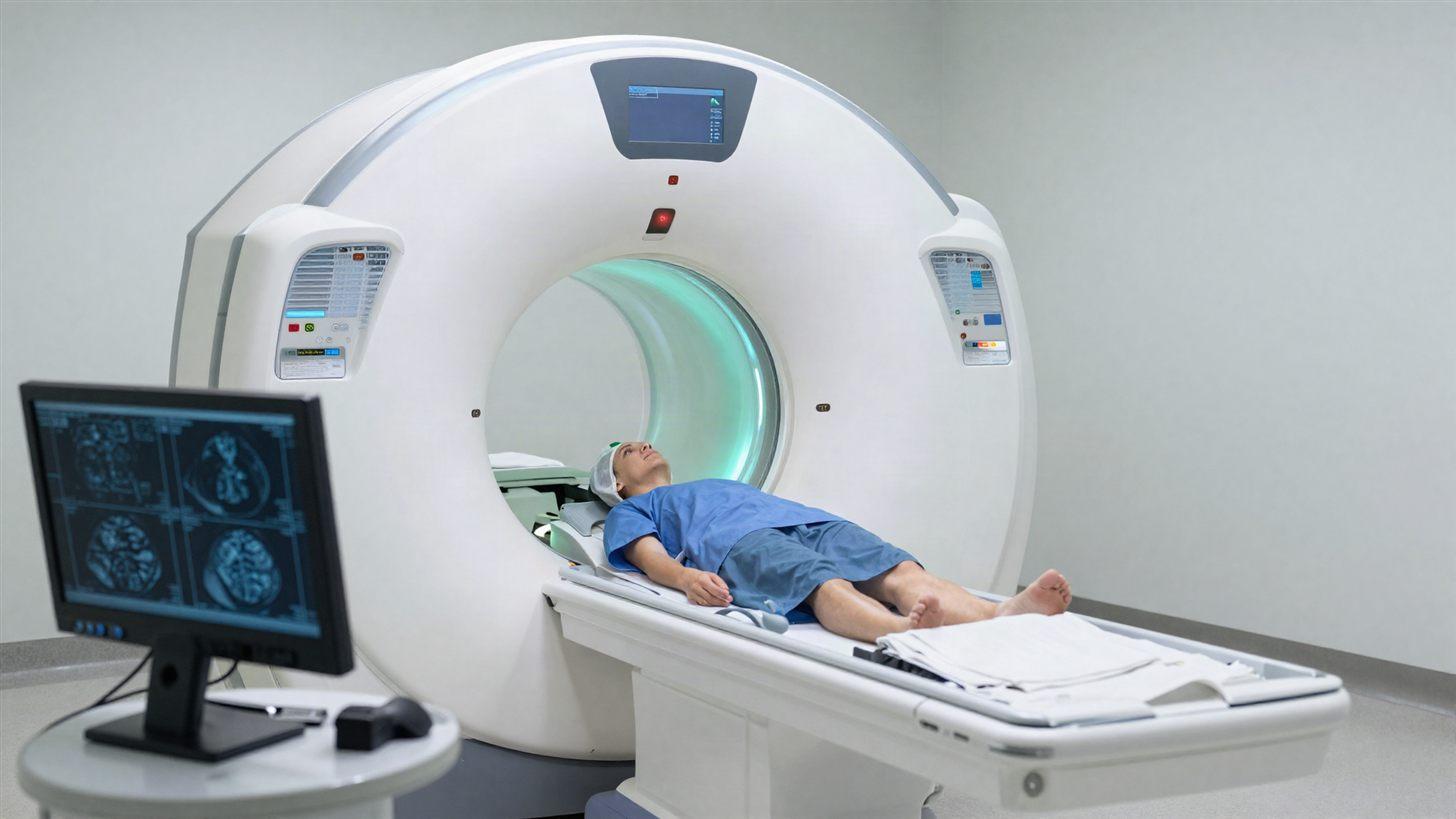
A prostate MRI has become a key step before biopsy in modern medical guidelines. It images the prostate in high detail, highlights any suspicious area and scores each one on the PI-RADS scale from 1 to 5:
- PI-RADS 1–2: very low likelihood of clinically significant cancer
- PI-RADS 3: equivocal, and your doctor decides the next step based on PSA and prostate size
- PI-RADS 4–5: high likelihood, and a targeted biopsy is usually recommended
Why does this matter? Because it helps many men avoid an unnecessary biopsy, and when a biopsy is needed it is more accurate because it targets the suspicious area directly.
How to prepare for the MRI
- The scan takes about 30 to 45 minutes, and a contrast agent may be injected into a vein
- Tell your doctor if you have a pacemaker or any metal in your body, or a kidney problem
- If you are claustrophobic, let the team know in advance
Step 3: Prostate Biopsy
A biopsy is the only way to confirm cancer. The doctor takes very small tissue samples from the prostate with a thin needle under ultrasound guidance, often fused with the MRI images (fusion biopsy) to target the suspicious area precisely. There are two approaches:
- Transperineal: through the skin between the scrotum and the anus. It carries a much lower risk of infection and has become the preferred approach in many centers
- Transrectal: the traditional approach, which requires preventive antibiotics
What to expect after the biopsy
- You go home the same day
- A little blood in your urine or stool for a few days, and in your semen for a few weeks, is expected
- Contact your doctor right away if you develop a fever or chills, can't pass urine, or have heavy bleeding
Step 4: Understanding the Result — the Gleason Score
If the biopsy shows cancer, the pathologist grades how different the cells look from normal using the Gleason score, which today is translated into Grade Groups from 1 to 5:
- Grade Group 1 (Gleason 6): low risk, usually very slow-growing
- Grade Group 2 (Gleason 3+4=7): favorable intermediate risk
- Grade Group 3 (Gleason 4+3=7): unfavorable intermediate risk
- Grade Group 4 (Gleason 8): high risk
- Grade Group 5 (Gleason 9–10): high risk and more aggressive
The lower the group, the slower the tumor tends to grow and the wider your treatment options, including active surveillance without immediate treatment in some cases.
Step 5: Staging
For intermediate- or high-risk cases, your doctor may order tests to see whether the disease is confined to the prostate or has spread, such as a bone scan, a CT scan or a PSMA PET scan, one of the most accurate modern tests for detecting spread. Based on your PSA, Gleason score and stage, the medical team will build the right treatment plan. Learn about prostate cancer treatment options.
Tips for Your Diagnostic Journey
- Write down your questions before each visit, and bring a family member if you can
- Keep copies of all your tests and scans in one file
- Ask what each result means and what the next step is
- Remember that most prostate cancers found early have very high cure rates
Have urinary symptoms and wondering about the cause? Read the difference between an enlarged prostate and prostate cancer.
Frequently Asked Questions
Is a prostate biopsy painful?
The biopsy is done under local anesthesia or light sedation, so most patients feel only mild discomfort. Afterwards you may see a little blood in your urine or semen for days or weeks, which is expected and clears up gradually.
Can a biopsy spread prostate cancer?
No. This is a common myth, and there is no scientific evidence that a biopsy spreads prostate cancer. It is the only way to confirm the diagnosis and choose the right treatment.
Can prostate cancer be diagnosed with an MRI alone?
An MRI identifies suspicious areas and the level of suspicion (PI-RADS) and helps avoid unnecessary biopsies, but a final diagnosis requires a biopsy and examination of the tissue under a microscope.
What does a Gleason score of 6 or 7 mean?
Gleason 6 (Grade Group 1) means low-risk, usually slow-growing cancer that can often be managed with active surveillance. Gleason 7 (Grade Group 2 or 3) means intermediate risk, and your doctor will choose treatment based on your other results.
How long do prostate biopsy results take?
Tissue results are usually ready within one to two weeks, and your urologist will go through them with you in detail along with a proposed treatment plan.
Start Your Diagnosis at Katameya Clinic Hospital
Our Surgery & Urology team, together with our Radiology and Laboratory departments, provides the full assessment under one roof, with a clear explanation at every step.
📞 Call our hotline 15027
💬 Message us on WhatsApp +20 11 27772113
📍 Or reach us through our booking & contact page
Worrying result? You don't have to face it alone. Book your appointment today. 💙
This article is for awareness purposes only and does not replace a consultation with a specialist.